Primary Clutch
The primary clutch is attached to the engine via the taper on the crankshaft. Adjustments to the primary clutch can change your engagement RPM, peak RPM, how fast the engine accelerates, the RPM curve, and how responsive the car is while on and off the throttle.
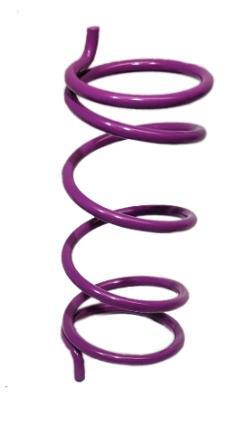
Primary Spring
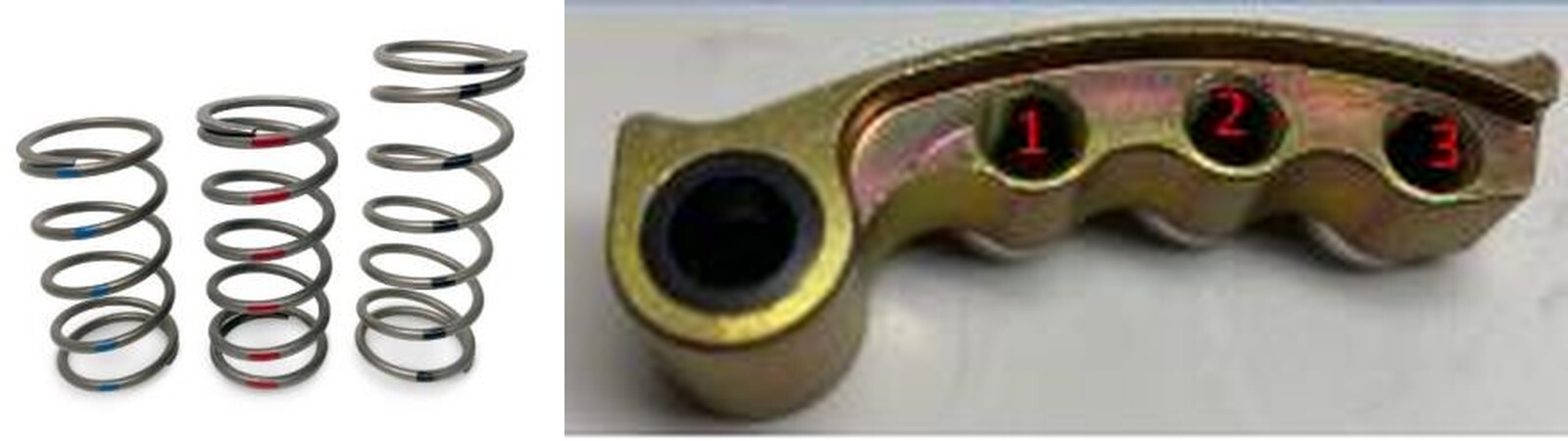
The primary spring affects your engagement RPM, peak RPM, RPM curve, and responsiveness.
- A stiffer primary spring results in a higher engagement RPM, as well as a higher peak
RPM
- The spring rate of the primary spring affects your RPM curve. For example, if your primary spring is a 180/250, and you change it to a straight 250, your RPMs on the first half of the shift are going to be much higher, because a stiffer spring equals more RPM.
- A stiffer primary spring will also make the clutch back shift faster. What this means is if you come into a corner going 60mph, and exit the corner going 20mph and floor it, the car will respond quicker than it would with a really soft spring. Think of it like a car with a manual transmission. If you come into the corner in 6th gear and exit the corner in 2nd gear, you will accelerate much faster out of the corner than you would if you were still in 3rd or 4th gear when you went to get back on the gas.
Clutch Weight / Arm / Cam
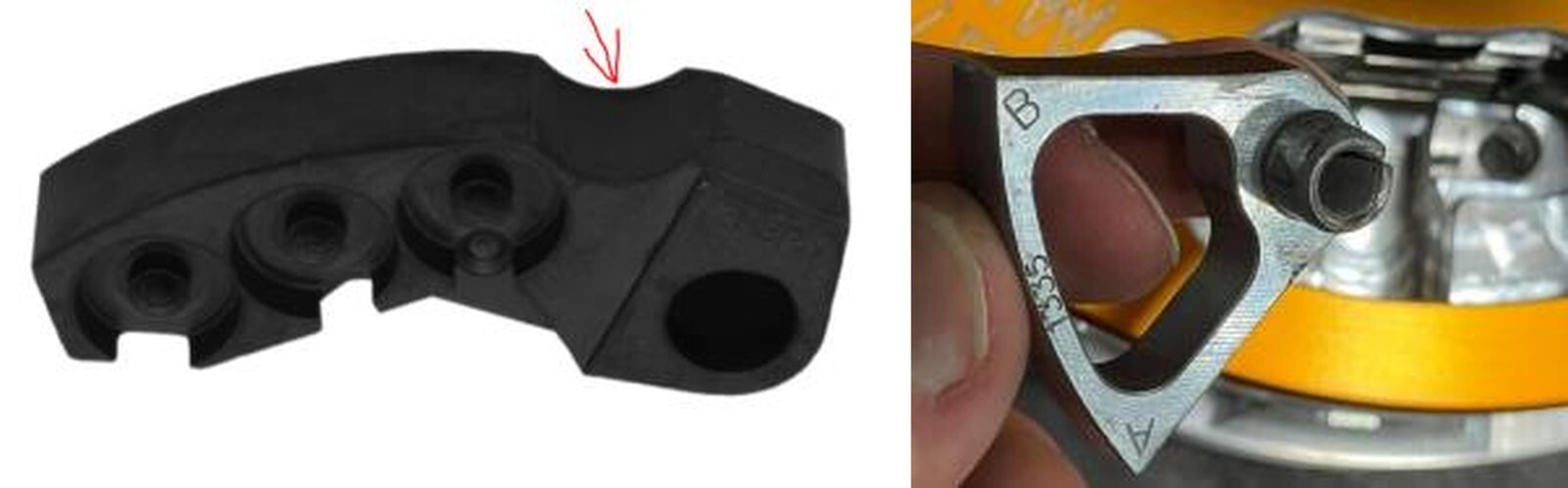
For all clutches that we currently use except for the TAPP, the weight (also known as the arm, or cam arm) is what forces the moveable sheave on the primary clutch to close as RPMs increase. This is the main component that we use to adjust peak engine RPM.
- A heavier weight equals less engine RPM. A lighter weight equals more RPM.
- Some weights like what come in the STM, Shift Tek pDrive kits, or QSC Polaris kits have multiple areas on the arm where you can add or remove weight. The location of the weight changes the engine RPM at a given speed. For example, if you add weight to the heel of the arm, your RPMs will be lower out of the hole, but remain roughly the same at
a higher speed. Adding weight to the tip of the arm would lower your peak RPMs but have little effect on your RPMs out of the hole.
For example, if you were targeting 9000rpm, but you were hitting 9300rpm out of the hole and only reaching 8800rpm towards the end of the run, you would add weight to the heel and remove weight from the tip to flatten out the RPM curve.
- The profile, or angle at which the weight is cut will drastically change the way the engine comes up on RPM. This can affect your RPM curve as well as the responsiveness of the machine.
- Some weights have a “notch” in the heel which traps the roller and prevents the clutch from shifting until a given RPM. This is a technique that is used to achieve a very high engagement for drag racing.
Ramp (TAPP Specific)
TAPP primary clutches work opposite to a traditional clutch. Instead of having an arm that’s attached to the moveable sheave that pushes on the spider, the TAPP has a ramp which is bolted to the moveable sheave and remains stationary. There is a separate arm on the spider which pushes on the ramp to force the moveable sheave inward. Unlike a traditional cam arm, you cannot add or remove weight anywhere to flatten out the RPM curve, and as a result more work must be done with the secondary clutch to achieve a flat RPM curve.
- The concept still remains the same. The profile of the ramp determines how the clutch shifts, and some ramps have a lip at the bottom which traps the roller just like a notched weight would.
- Side B is always a higher engagement. Side A is always a lower engagement.
Clicker (TAPP Specific)
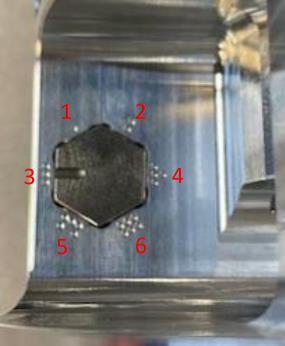
On TAPP clutches, the clicker is what the ramp sits on. The higher the clicker number, the steeper the ramp is.
- A Higher clicker number results in a higher peak RPM. It’s a very fine adjustment, about 100rpm per click if you do all 4.
- A higher clicker number will also make the car more responsive, so for a trail riding or short course scenario, it’s best to put the clickers all on 5 or 6 and counteract that with more weight in the primary clutch.
Secondary Clutch
The secondary clutch is attached to the transmission. Adjustments to the secondary clutch can change your peak RPM, how fast the engine accelerates, and the RPM curve. The secondary works opposite to how the primary works. The primary uses the centrifugal force of the weights to push the sheaves closed during acceleration. As the primary grips the belt, it pulls the belt through the secondary, forcing it open. The secondary spring and helix determine how fast this happens.
- The faster the secondary clutch opens (shifts), the lower your RPM will be. Think about it like a car, if you punch it from a stop and your car instantly shifts into 6th gear, it will bog and be very slow. Likewise, if you floor it and the car stays in 1st gear, it will hit the rev limiter. A CVT works the same way, you want the clutch to shift out at the right speed so that you maintain a consistent RPM from zero all the way to full shift out. You can use the helix and/or the secondary spring to change this.
Secondary Spring
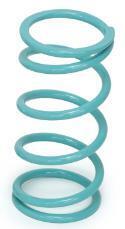
The secondary spring controls how quickly the secondary opens. A stiffer spring will slow how quickly the clutch opens (more rpm), a softer spring will allow it to open faster (less rpm)
- The spring rate of the secondary spring affects your RPM curve. For example, if your primary spring is a 180/250, and you change it to a straight 250, your RPMs on the first half of the shift are going to be much higher, because a stiffer spring equals more RPM.
- A stiffer secondary spring also gives you more grip on the belt, so it’s recommended to run a stiff spring on a heavy car.
Helix
The helix is bolted to the back sheave of the secondary and has an angled ramp that the rollers ride on. The angle of the helix determines how quickly the secondary clutch opens. Remember the faster the clutch opens, the lower your RPM will be, and the slower the clutch opens, the higher your RPM will be. The helix is the main component used to flatten out your RPM curve.
- Some helixes are the same angle all the way through, or straight cut. Others might have a step cut, or a progressive cut where the angle changes throughout the shift (ex. 35-45 or 41-52).
- A steeper helix angle, or a higher number, results in lower RPM. A shallower helix angle, or a lower number, results in a higher RPM
Let’s say you’re targeting 9000rpm and using a straight 40 helix, but the car hits the rev limiter out of the hole and falls off to 8600rpm at the end of the run. You would want a steeper initial angle to keep it off the rev limiter, but a shallower finish angle to keep the RPMs up at the end of the run, like a 44/36 for example.
- A shallower helix angle will also make the car more responsive. On big turbo dune/trail cars that are slow to come up on boost, but have lots of power up top, I like to use a 35- 45 or a 40-45 as the shallow angle helps them spool faster, but the steep finish angle ensures that the RPM won’t be too high once the power comes in. That being said, the 35 or 40 degree initial angle is too shallow to use launch control at a high rpm (4000+) and the car will probably over rev on the take off.
Belt Deflection
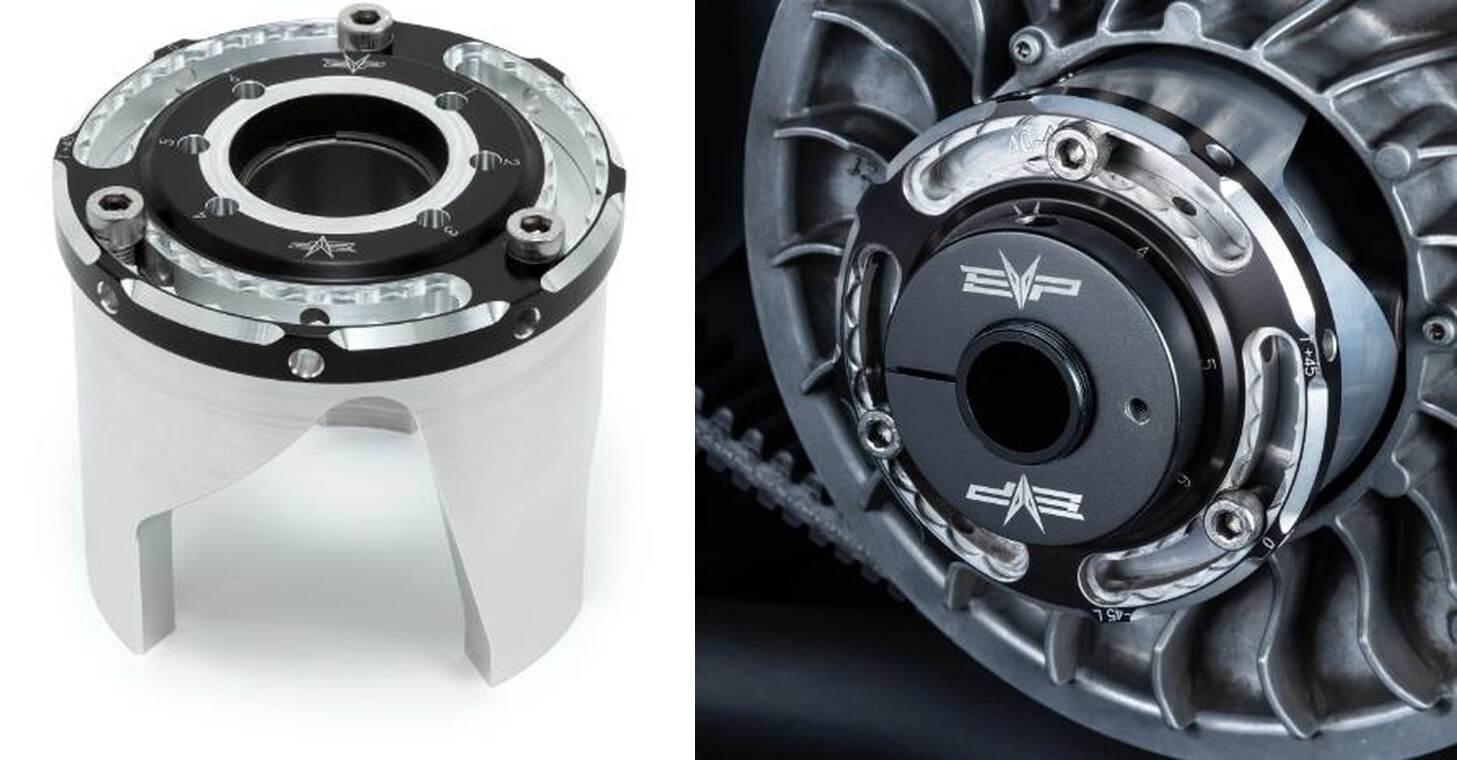
Some secondary clutches such as the STM, or the X3 stock secondary with the EVP belt deflection adjuster kit allow you to adjust your belt deflection (belt tightness). This is done by using a collar on the post which pushes on the top of the helix and holds the secondary clutch open slightly. The further open the secondary is, the further down the belt sits, and the looser it is.
- Running a looser belt deflection is like taking off in 2nd gear in a car. Your RPMs will be much lower when the clutch is engaged, you will have more wheel speed as soon as the clutch is engaged, and therefore the car will be very jerky.
- From a performance side of things, it is best to run as tight of a belt deflection as you can while still maintaining a flat RPM curve.
- If you can’t get rid of an RPM spike immediately off launch control, you can loosen up your belt deflection a bit to fix it. You’ll want to start by running the outside of the belt flush with the outside of the clutch. Running too loose of a belt deflection can result in belt slip.